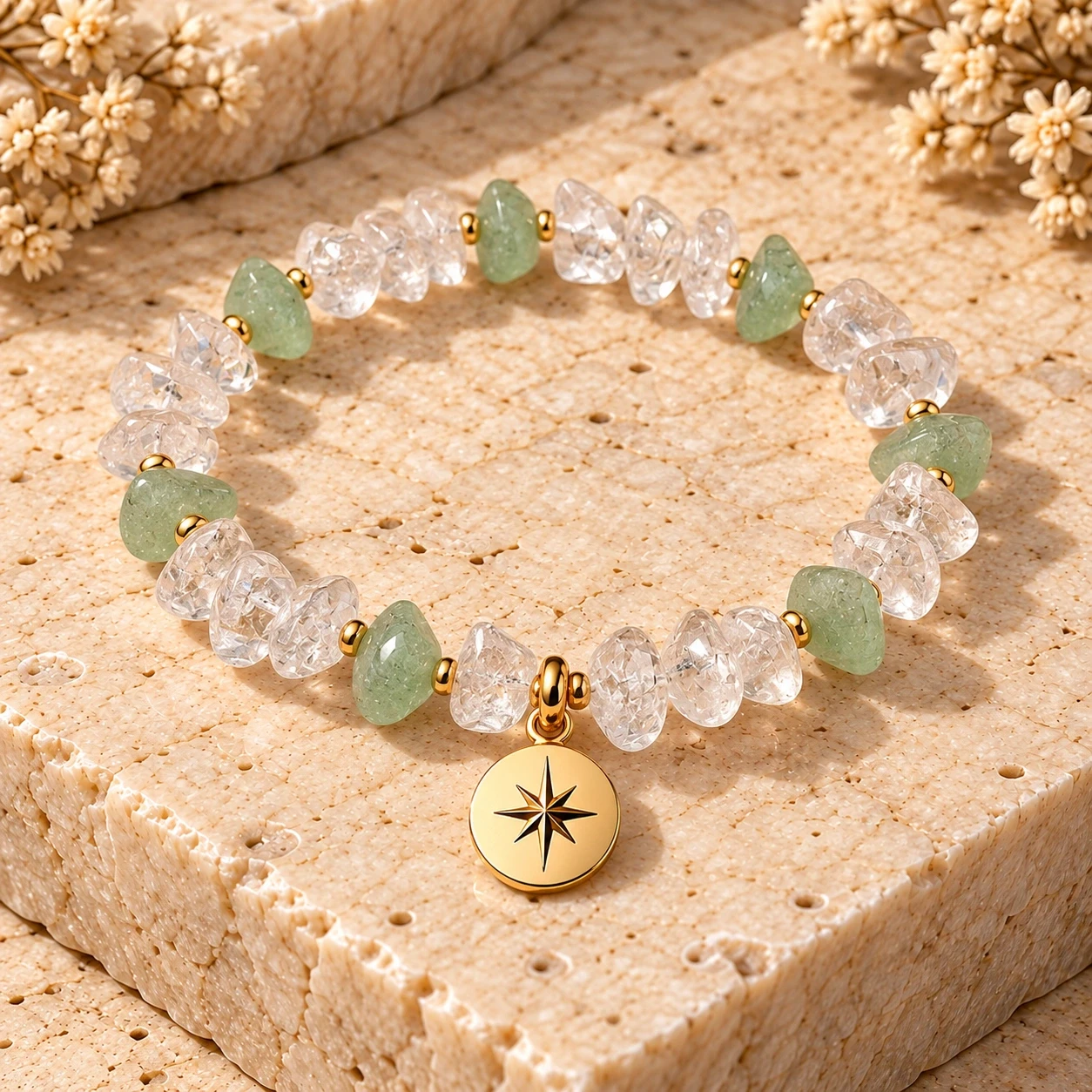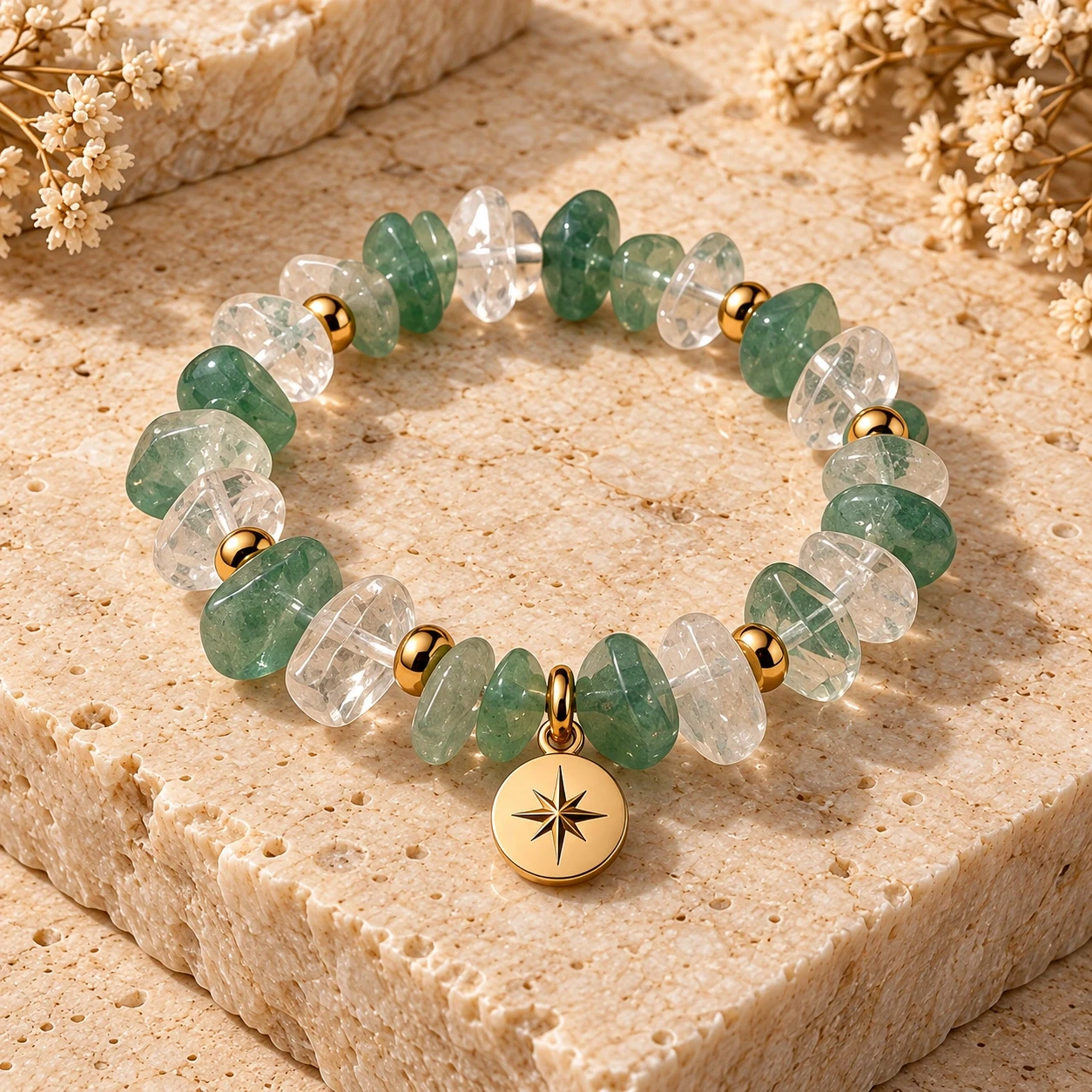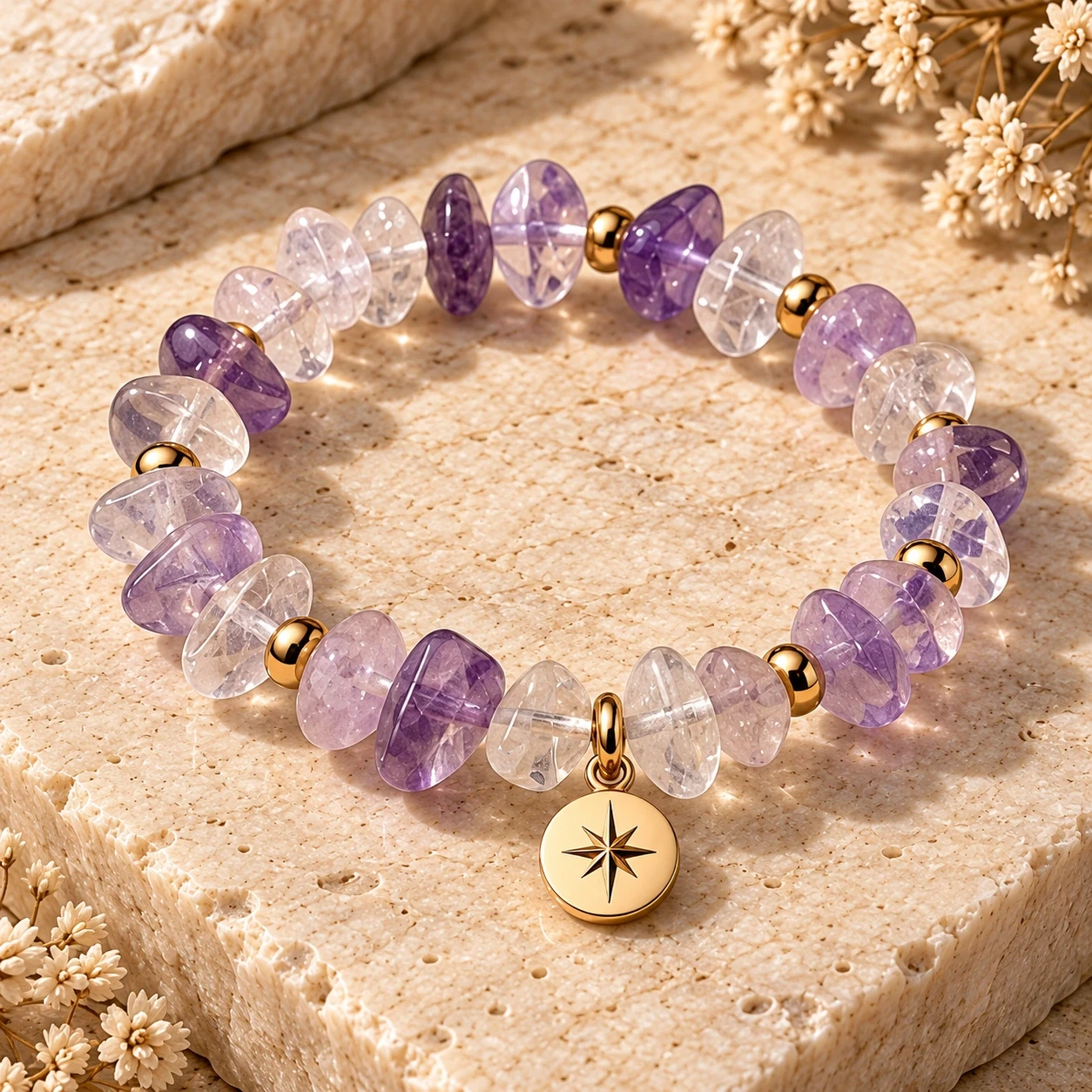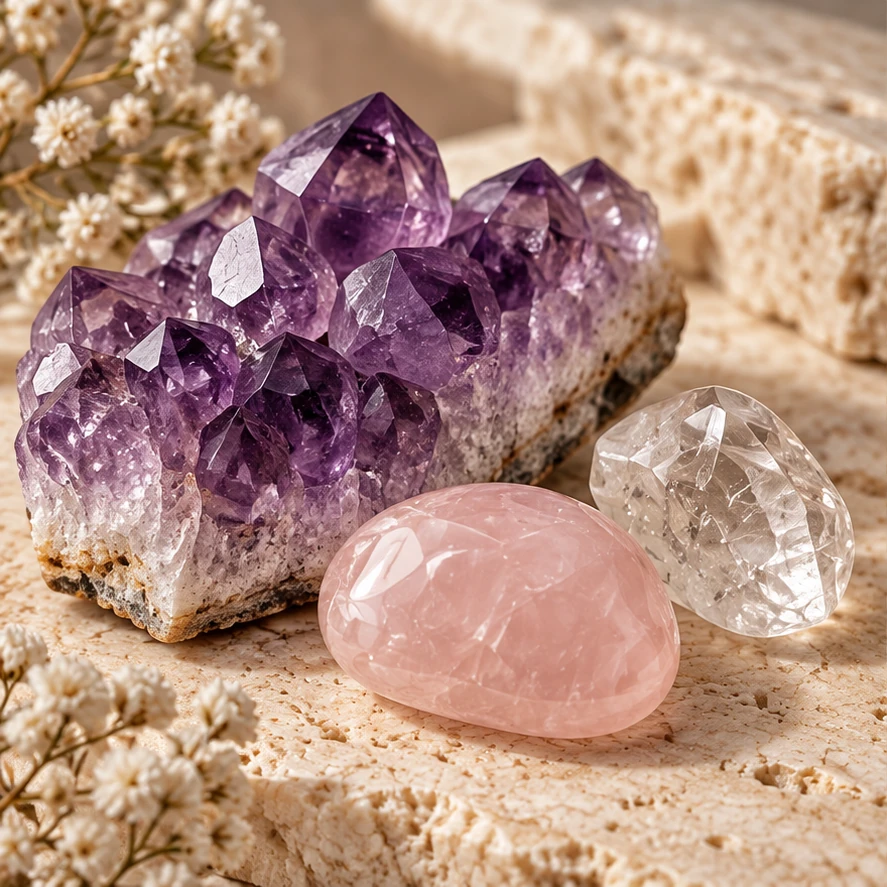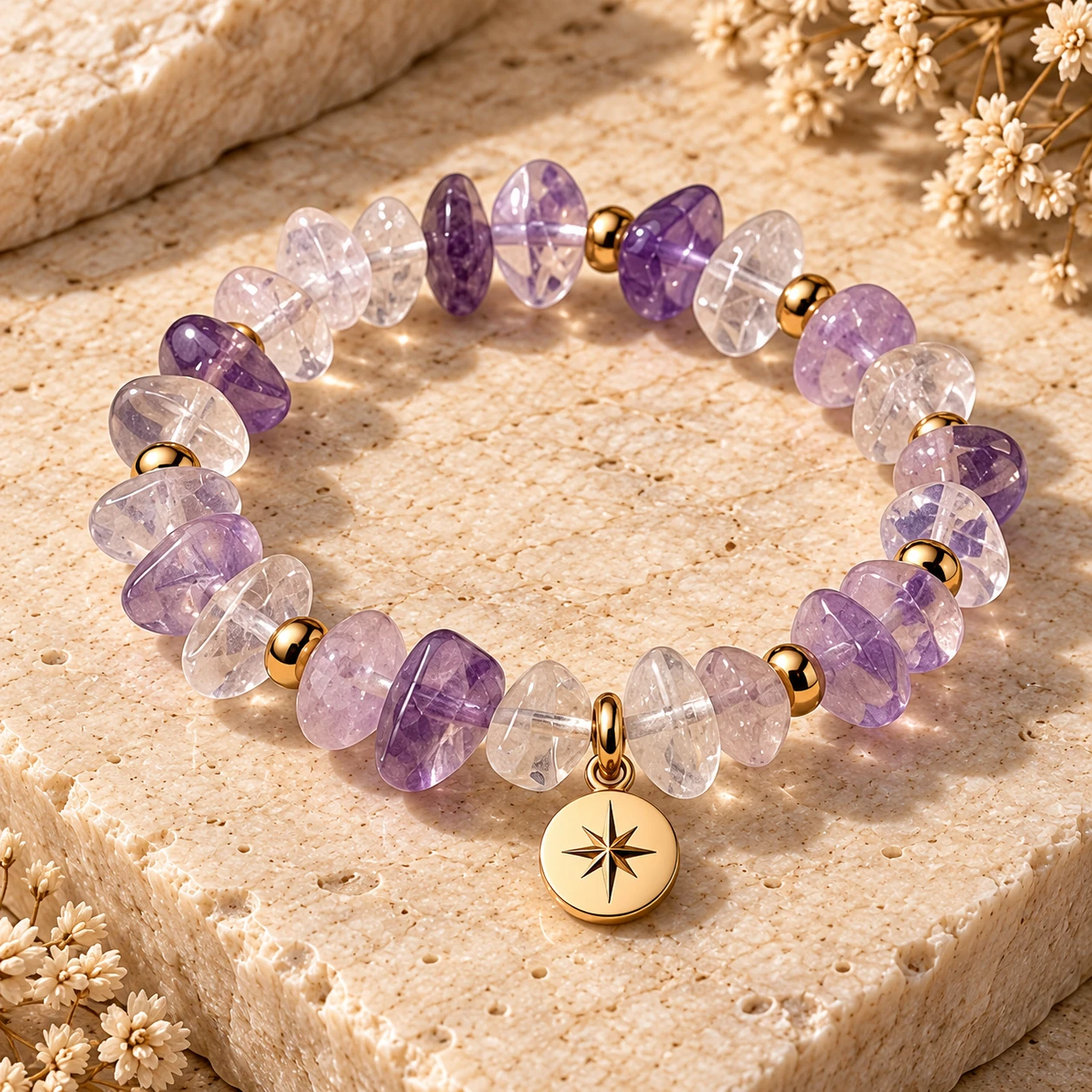
You like the uneven outline in a photograph, then wonder how it would look beside the watch you wear every day. Would round beads be easier to combine with it? Would a whole bracelet of chips feel like too much texture?
Those are useful questions to bring to a design. Start with the shape you want to see on your wrist, then ask about the physical details a picture cannot settle.
Compare the outline
Round beads repeat a more regular shape. Gemstone chips vary in outline, so the spaces between them become part of the composition. The same colours can look quite different in the two forms.
Neither shape tells you the material's identity or quality on its own. A stone name, the finish of the pieces and the way they have been drilled are separate things to confirm.
In the studio, try one palette in round beads and in chips. Look at the outside edge before choosing a charm. You may prefer the regular rhythm, or you may want the small changes that an uneven line introduces.
Think about what sits beside it
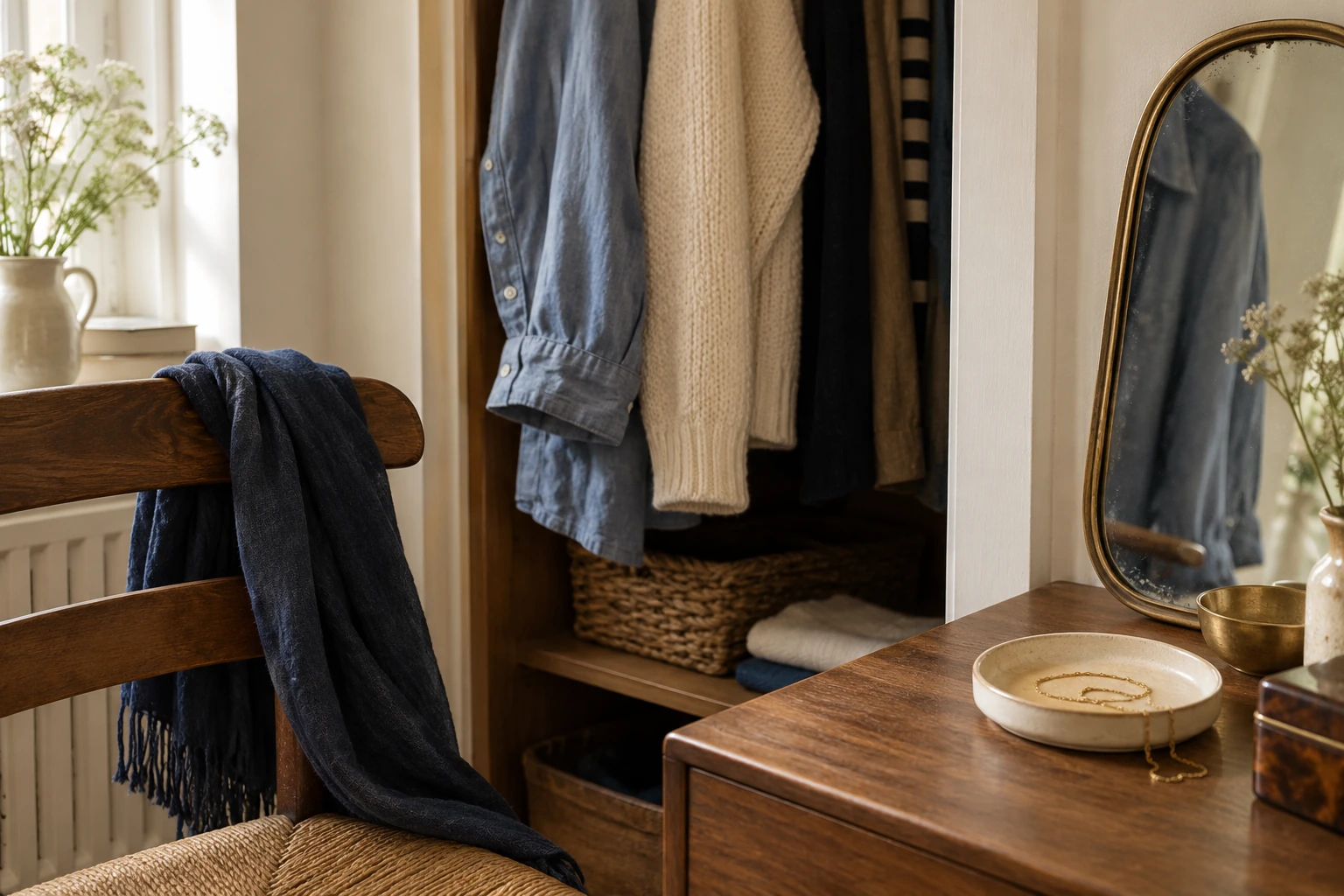
Consider your sleeves, watch and the jewellery you already wear. A textured bracelet might be the one noticeable detail beside a plain shirt. With a patterned cuff or several other pieces, you may prefer fewer colours.
Try taking something away before adding another element. Keep the stone combination and remove the charm, or keep one small disc while simplifying the colours. This makes it easier to see whether the shape itself is what you like.
The preview is a way to compare arrangements. It is not a test of physical fit, how the bracelet will sit against a watch or how a particular sleeve will move over it.
Ask to see the finished edges
For a piece you want to wear often, ask about the surface finish, edges, drill holes and threading. Request a close view of the proposed materials or a sample when those details matter to your choice. A design image cannot establish whether a particular batch will feel right against your skin.
Give your wrist measurement and explain how you usually wear a bracelet. A loose fit for an occasional evening and a closer fit beside a watch are different requests. The maker needs that information before agreeing a finished size.
Care depends on the actual stones, metal and threading used. Keep the instructions for the finished piece rather than assuming that every bracelet called “crystal” can be cleaned in the same way.
Choose what you would keep looking at
An uneven composition can be something you enjoy without turning it into a rule about your personality. You might like the way clear and green pieces interrupt each other, or the way purple looks beside one warm metal shape.
Save a round-bead version as well as a chip version. Look at them again the next day. If one still feels like something you would reach for, you have learned more than a long list of suggested meanings could tell you.
Back to the journal